Grain-drying optimisation for agriculture using IoT sensing and machine learning
AI-optimised grain drying with sensors tough enough to survive the harvest.
The Challenge
Grain must be dried to fractionally below the acceptable moisture threshold before sale: over-dry it and the estate wastes energy and sells lighter grain; leave it too moist and it fails the threshold entirely. With one drier processing thousands of tonnes per harvest and grain worth several pounds a tonne more when dried precisely, the difference adds up quickly — but the drying environment (up to ~100°C inside industrial driers, wind and rain in the field) is hostile to conventional sensing, and expert drying knowledge is scarce across simultaneous harvests.
The Solution
NquiringMinds developed a suite of agritech sensors gathering key harvest-data metrics across the full crop life cycle — sowing, growing, harvesting, drying, storage and delivery — combined with state-of-the-art machine learning and real-time responses to a dynamic system. Sensors operate in harsh environments with robust long- and short-range transmission and seasonal deployments lasting up to a year without battery change. Interactive cloud-based visualisations, analytics and control systems reduce energy consumption and environmental impact, and share scarce expert knowledge across multiple simultaneous harvests via remote intervention and machine-learned “expert knowledge”. Sensor hubs were built on the ST STM32 platform, and the platform is hardware neutral so it integrates onto existing plant and machinery using open-source and IoT standards.
Outcomes
The project delivered a working IoT network operating at up to 100°C with machine-learning-driven drying control, enabling grain to be dried confidently to just below the moisture threshold for maximum profitability. It raised the technology from TRL 2 to TRL 4 and was pivotal in unlocking follow-on work, including India rice drying and storage pilots with Brunel University that built directly on the Agrisense approach.
In Detail
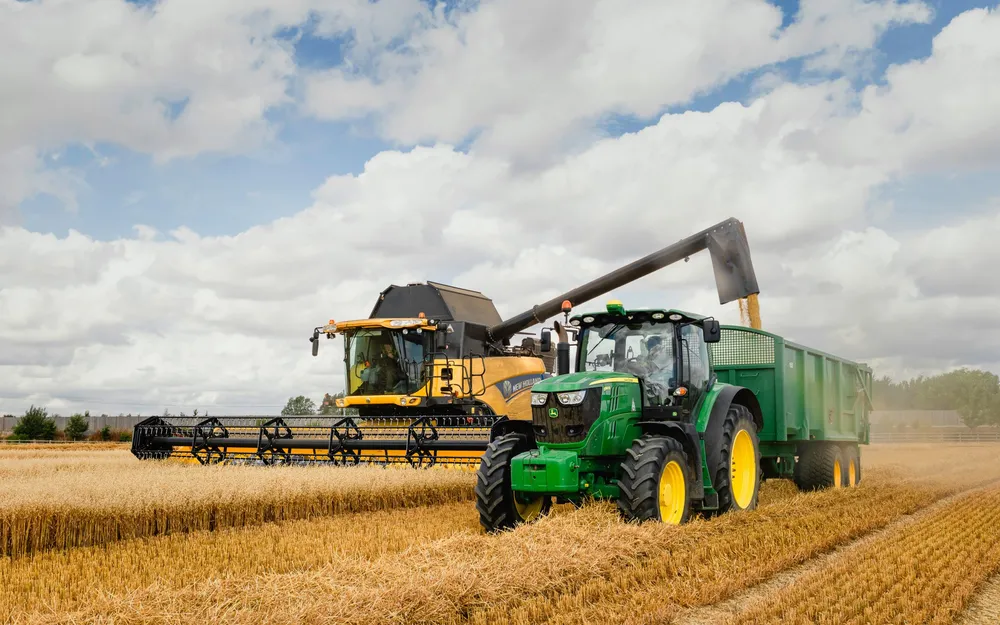
Operating an IoT network in extreme conditions to dry grain. Data analytics and IoT devices are powerful tools for reducing spoilage and increasing yields in agriculture. Processes that rely on periodic human inspection and timely interventions fail frequently because of resource constraints, lack of expertise and the speed at which crops can be spoilt. Agrisense pairs harsh-environment sensing — surviving industrial driers at up to 100°C, wind and rain in the field, and year-long battery deployments — with machine-learning control that dries grain confidently to just below the moisture threshold for maximum profitability.
Agrisense is as much an industrial control story as an agritech one: NquiringMinds’ multi-award-winning platform has been applied to many industrial applications, including control systems for agricultural grain driers, with an emphasis on security, connectivity and analytics that makes it ideal for demanding industrial problems.
Features

Sowing, growing, harvesting, drying, storage, delivery.

Machine-learning-optimised grain drying to just below the moisture threshold.

Up to ~100°C in industrial driers; wind/rain-resistant in the field.

Robust long-range (weak field-to-farm) and short-range (noisy industrial) transmission; up to one year on battery.

Interactive cloud-based visualisations, analytics and control systems.

Remote expert intervention plus transfer of expert knowledge into honed ML systems across simultaneous harvests.

Sensor hubs on the ST STM32 EuroCPS platform.

An IoT + ML control loop proven in extreme drying conditions, hardware neutral for any existing equipment.
Benefits

Grain sold for several pounds a tonne more by drying confidently to just below the threshold; with thousands of tonnes per drier per harvest the additional revenue accumulates quickly (documented in NQM case-study material).

Reduced energy consumption and environmental impact of the harvest (project aim; documented capability).

Raised technology-readiness level from TRL 2 (technology concept formulated) to TRL 4 (experimental proof of concept).

Pivotal in NQM securing subsequent funding, including a £1.5m Innovate UK investment supporting India rice drying/storage pilots with Brunel University.
Volt features used

AI as first-order elements — fast

configurable and dynamic policy

wrap third-party / legacy systems that lack a mature API

open standards and open source, by commitment

lightweight; embedded Pi or smaller

bearer agnostic

fuse multi-source sensor and ISR data into a single coherent picture
News

UK – Operating an IOT network in extreme conditions to dry grain
nquiringminds have developed a suite of agritech sensors that are capable of gathering key agricultural harvest data metrics and deploying state of the art machine learning to drive efficiency, energy and environmental gains. In agriculture our sensor technology works well at giving information from inaccessible places. The technology supports open source and IOT standards for.

Machine Learning in the Field for More Successful and Eco-Friendly Farming
Challenge & Solutions Sustainable agriculture requires efficient and accurate reporting of crop yields, data that can be used to assess factors that impact productivity and point to improved harvests in future years. Given enough time, grain experts relying on manual data collection are typically able to point out ways to increase yields through moisture optimization,.
