Local economic recovery planning for councils using AI business-rates analytics
Using data to re-generate and expand the local economy.
The Challenge
High streets had been in decline for years when the COVID-19 pandemic shocked local economies further. Sectors reliant on face-to-face interaction — hospitality, transport, entertainment — suffered far worse than those able to operate under social-distancing rules, so every local economy was hit differently, and councils needed to plan recoveries suited to their own places and communities. Local authorities like BCP Council held rich but under-used data (business rates above all) and lacked tools to turn it into a current, forward-looking view of economic activity.
The Solution
Economic Analyser applies NQM’s portfolio of AI and data-modelling techniques to exactly this problem: it helps local authorities improve decision making to re-generate and expand the local economy. Using data analysis and forecasting, the application improves understanding to help plan and manage the local economy. Intelligent analysis of business-rates data and other key variables — combining multiple data sources including GIS and Companies House — provides a rich context around the underlying rates data. The tool was developed hand in hand with local authorities to increase revenue, improve the environment and deliver a better quality of life to citizens. A live demonstrator was hosted at economic-analyser.nqm-2.com.
Outcomes
The work delivered the analyser tool and demonstrator for BCP Council and generated follow-on interest from Belfast City Council, where NQM applied machine-learning analytics to support and optimise business-rates collection — building on NQM’s earlier Belfast business-rates work that featured as one of only two SME case studies in a UK Government industrial-strategy whitepaper. Ealing Council and the Greater London Authority featured alongside BCP and Belfast as engaged authorities in the case study. NQM’s related economic-resilience work was also selected as a finalist in a Mayor of London challenge.
In Detail
Using data to re-generate and expand the local economy.
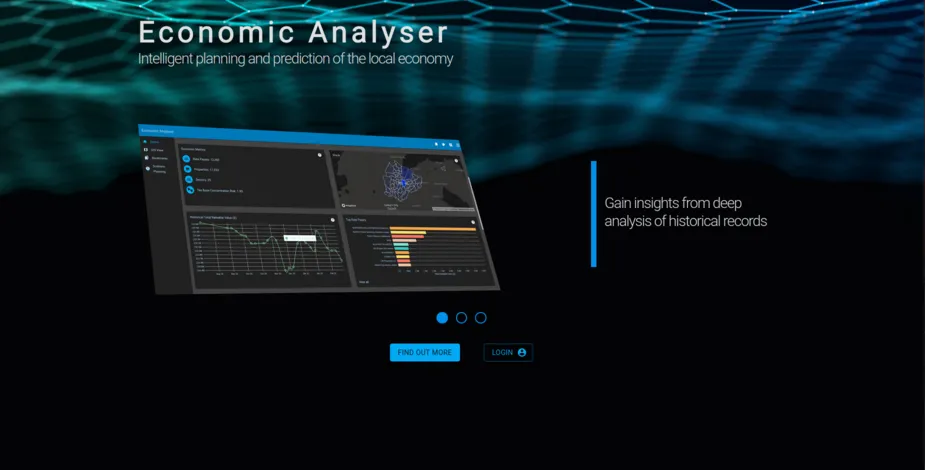
The Economic Analyser application helps local authorities to improve decision making to re-generate and expand the local economy. Using data analysis and forecasting, the application improves understanding to help plan and manage the local economy. Intelligent analysis of business-rates data and other key variables — combining multiple data sources, including GIS and Companies House — provides a rich context around the underlying rates data. The Economic Analyser has been developed hand in hand with local authorities to increase revenue, improve the environment and deliver a better quality of life to citizens. Authorities engaged include Belfast City Council, Ealing Council, the Greater London Authority and BCP Council.
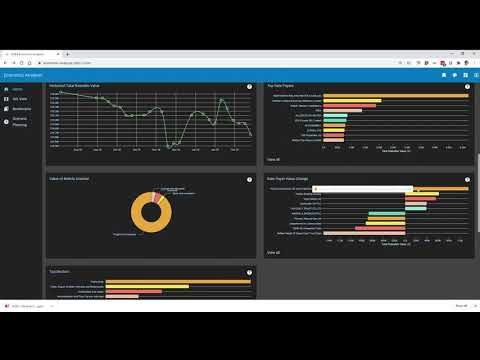
Product walk-through video:
Core benefits
- Secure — state-of-the-art digital certificate-based security gives organisations the confidence and assurance they need to share data.
- Privacy — fine-grained permission levels ensure only the right people access sensitive information.
- Smarter planning — understand the health of the local economy, the impact over time of different measures, and analyse data in a geographical context.
- Resilience — identify risks and threats to economic health; mitigate the potential damage of over-reliance and struggling sectors.
Data import & reconciliation. The data import module enables diverse data sources to be uploaded into a standardised format, taking imports from either an API or CSV/Excel export. The frequency of the data points available in the system can be increased to give a more accurate view of the economy over time. To provide a context-rich tool for exploration of data, the data reconciliation module matches properties for which rates have been collected against company profiles in Companies House data. The final stage geocodes properties so they can be analysed in a geographical context.
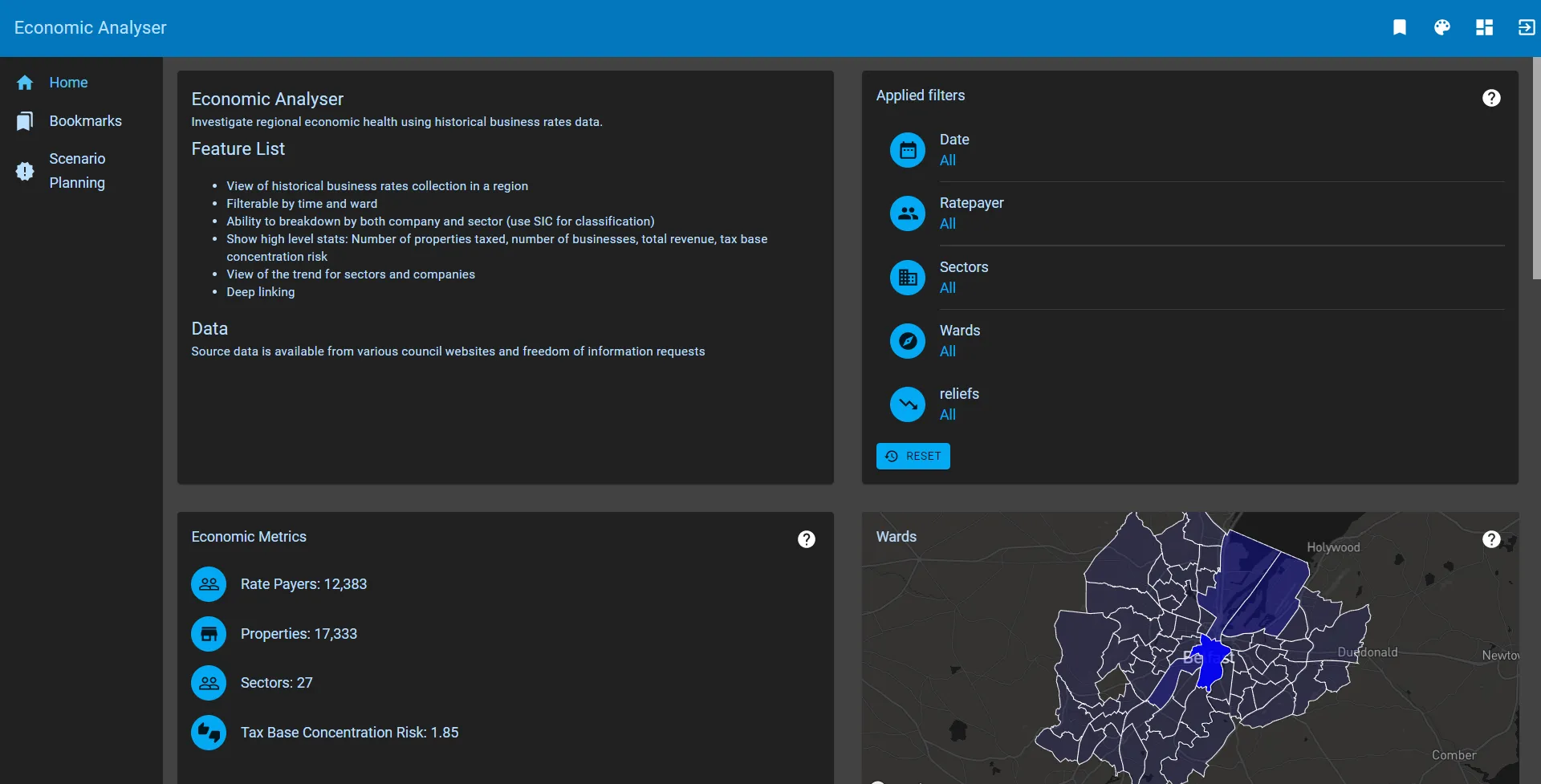
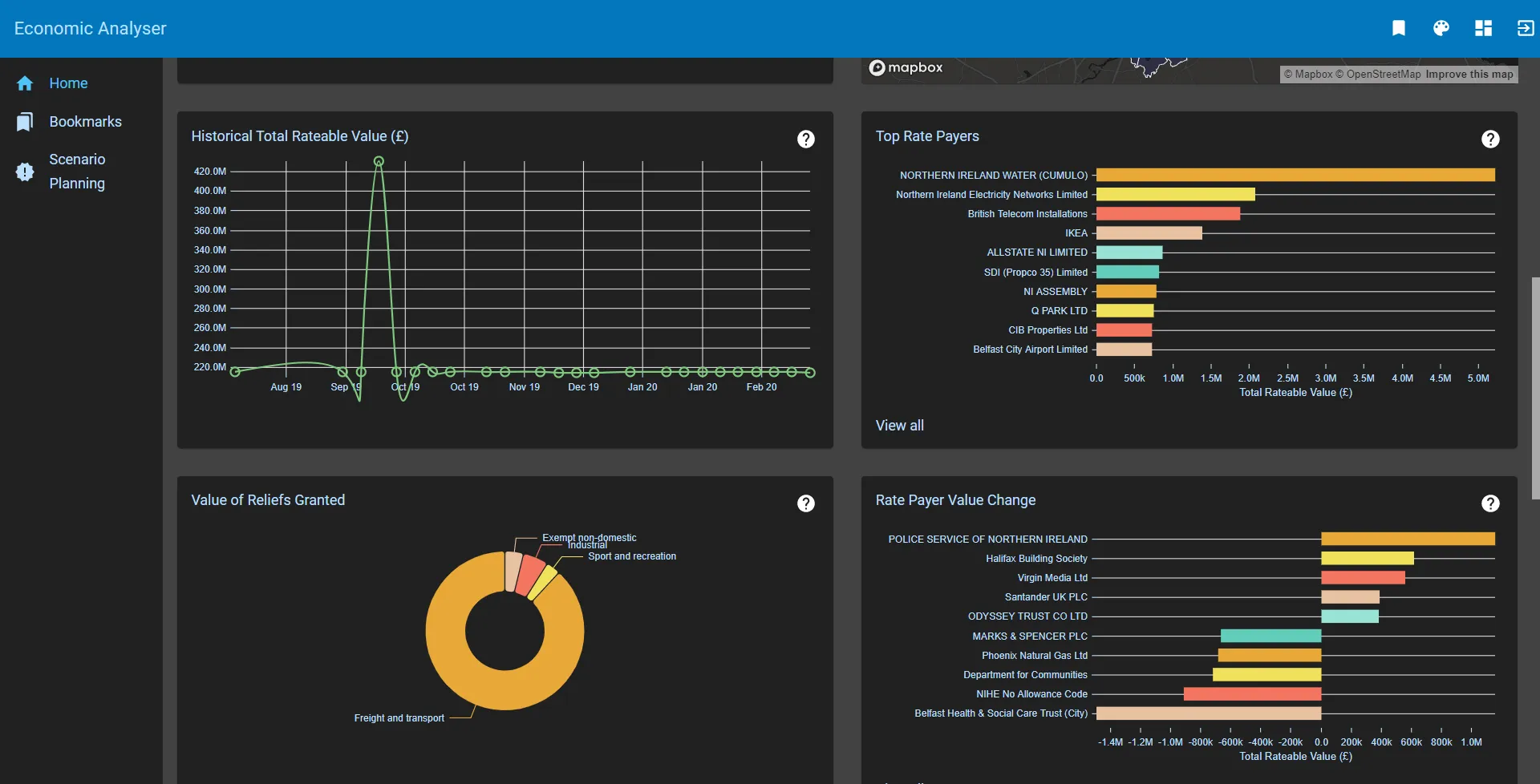
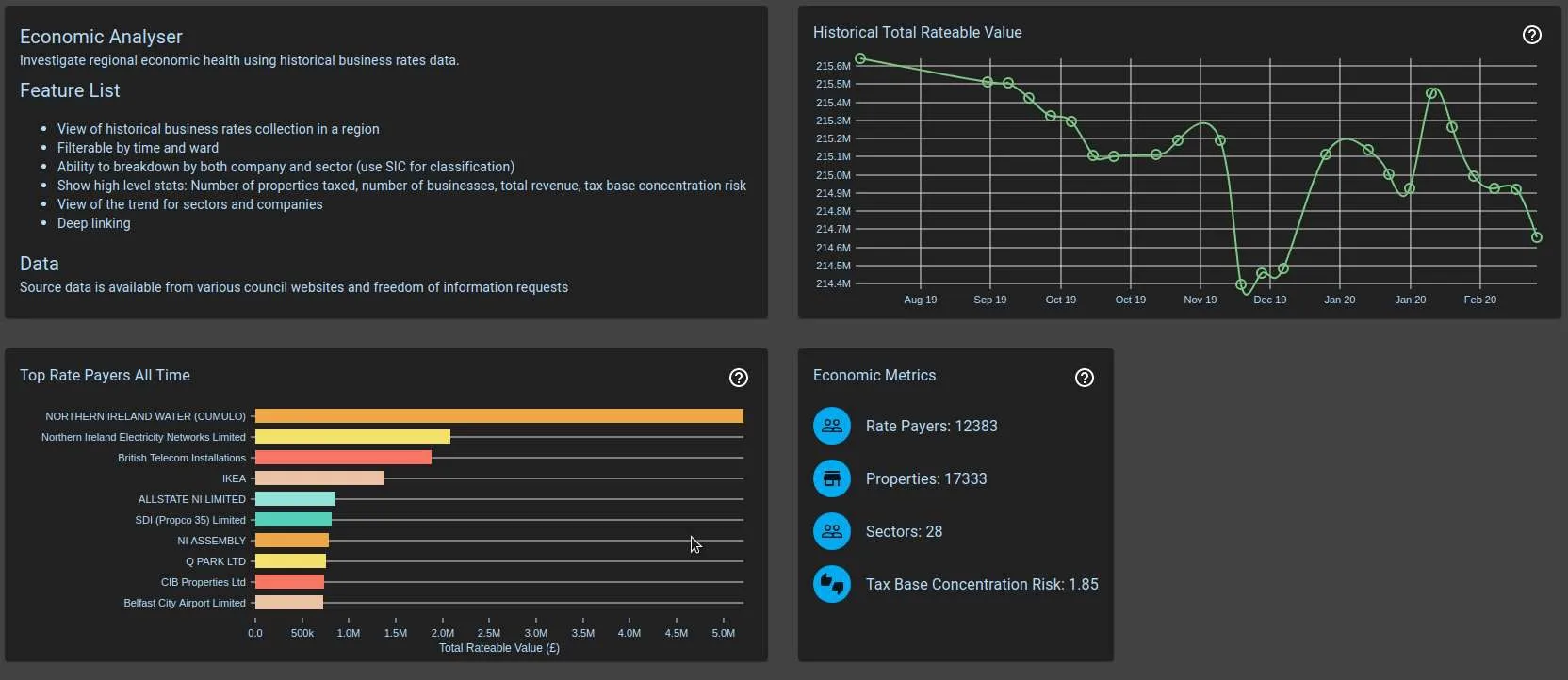
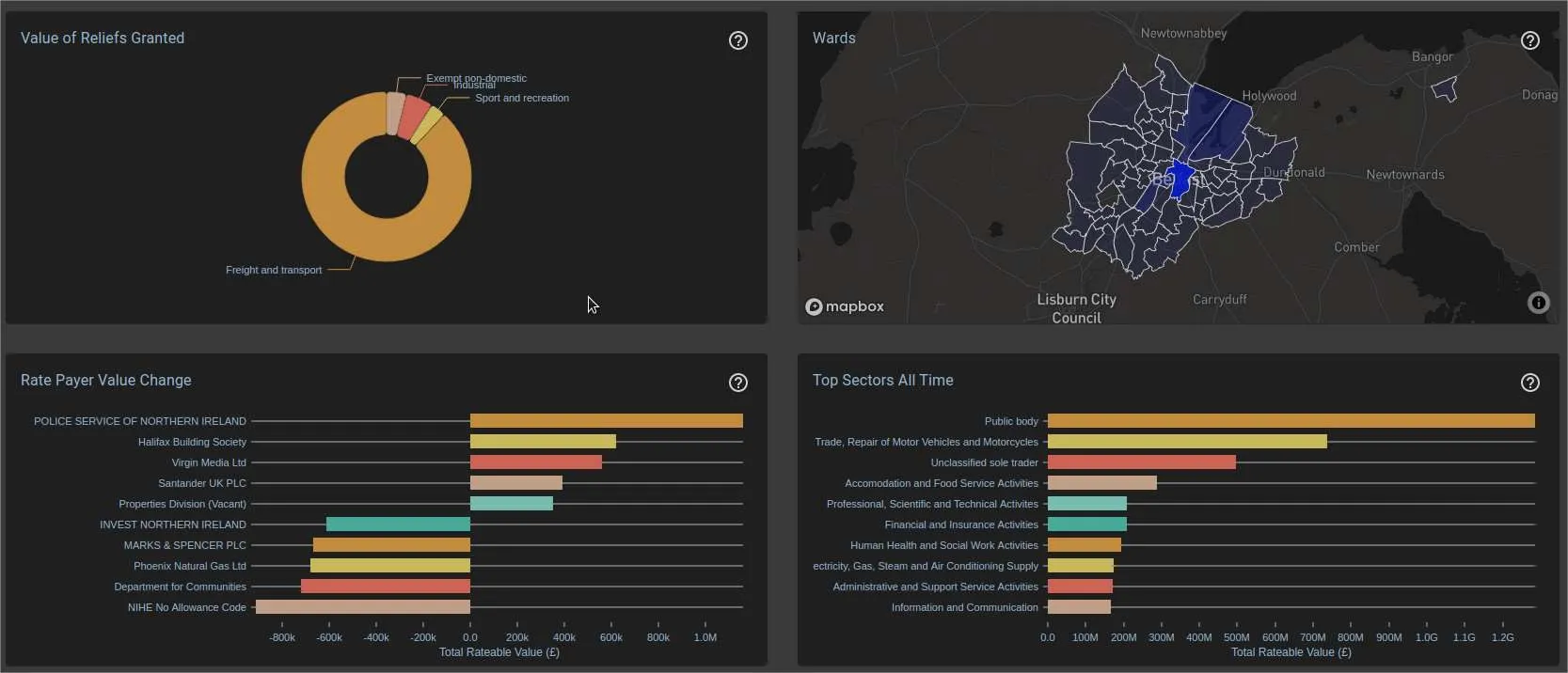
Data visualisation. The data visualisation module provides an easy-to-use, filterable view of business rates collected over time. It allows sub-setting the data across a broad range of parameters including sector, ward, and relief.
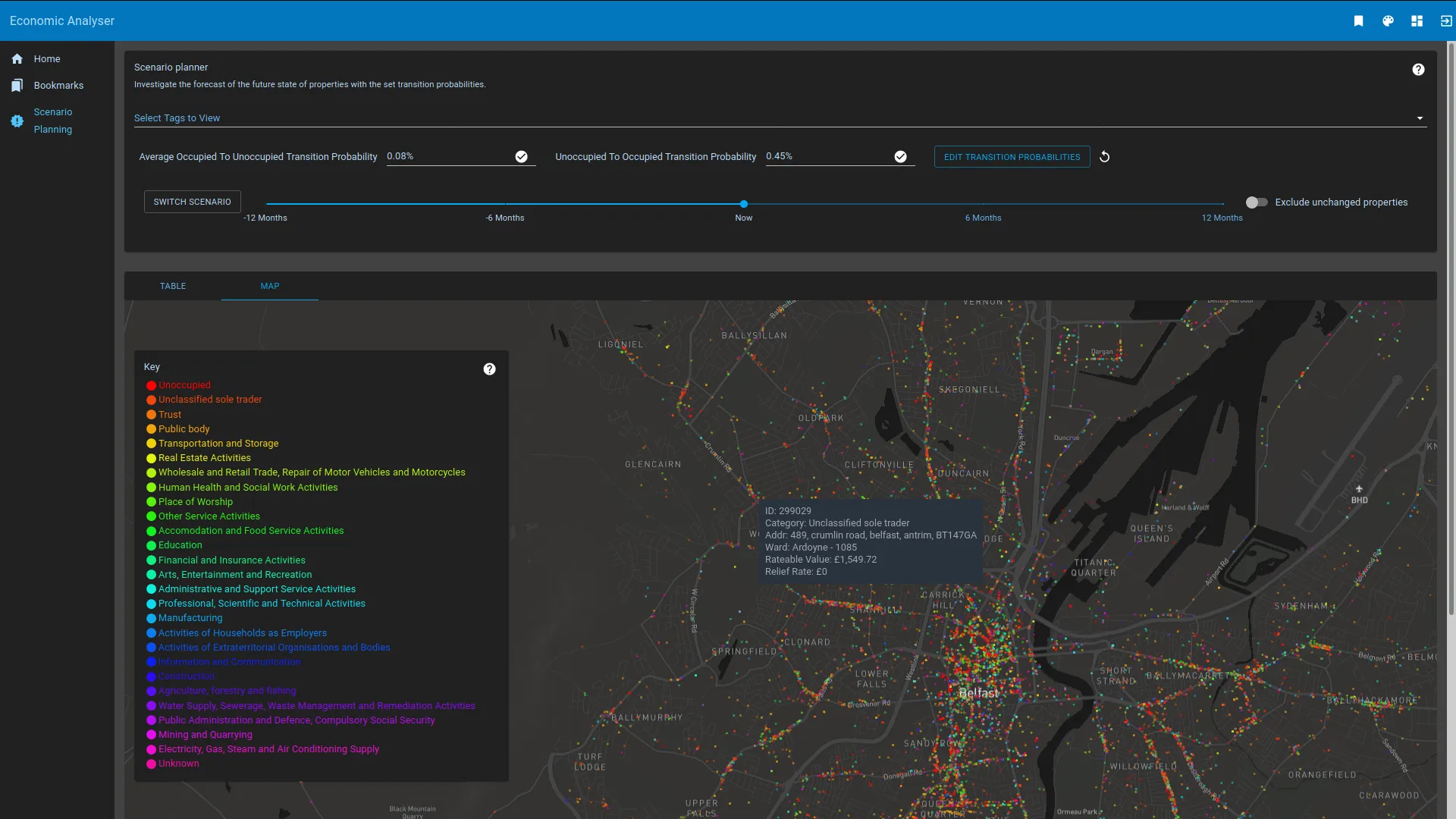
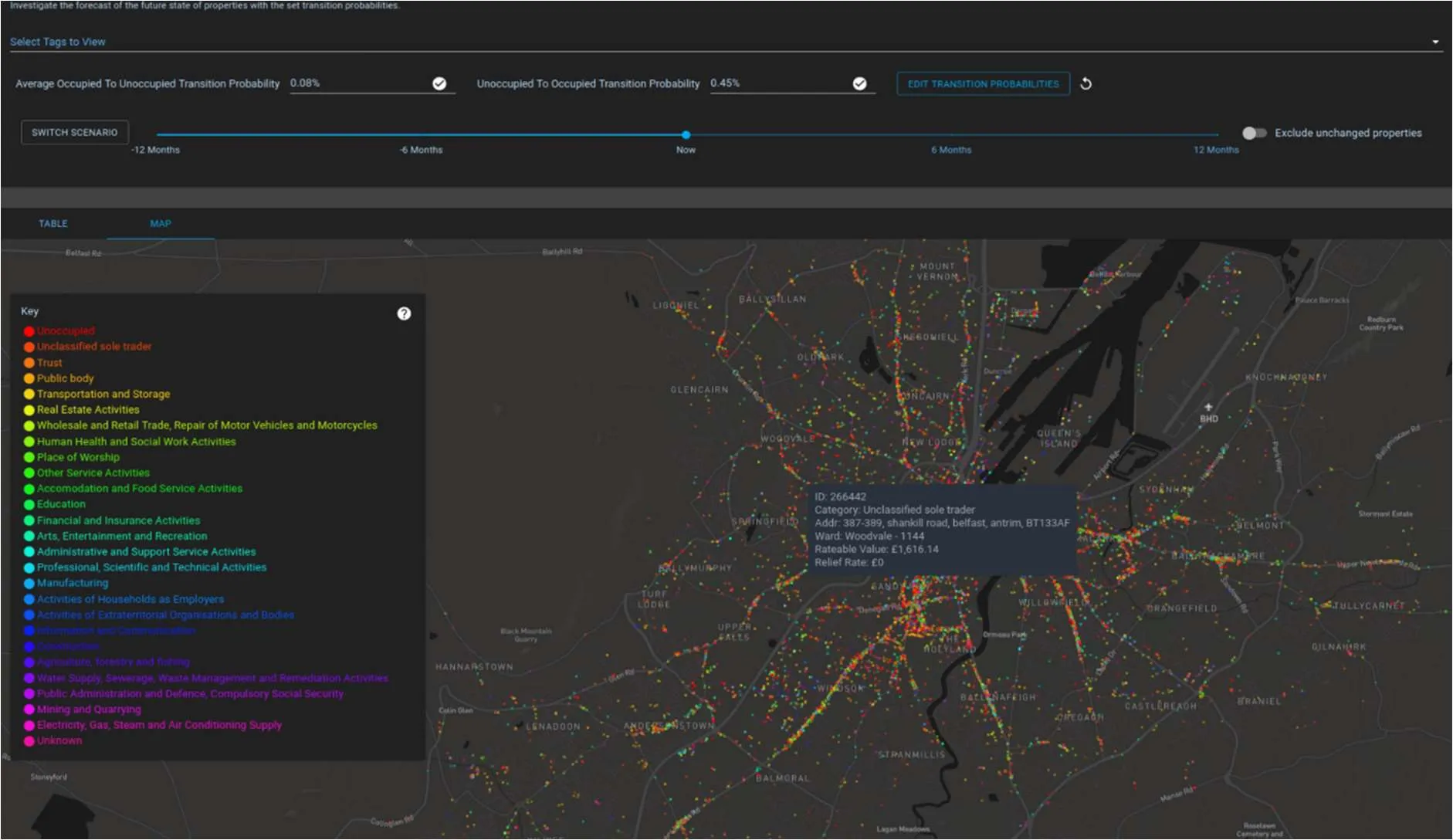
Scenario planning. The scenario planner displays visually, in both GIS and tabular format, the state of properties in the selected timeframe: past, present, and future. The future state is forecast using transition probabilities derived from the data; these can be amended by changing the occupied-to-unoccupied ratio, as well as the likelihood of transitioning between specific uses.
“Given the unprecedented economic impact of the pandemic and uncertainty about the future direction of the economy we cannot afford to be complacent…” — Cllr David Renard, Leader of Swindon Borough Council, March 2021
Award highlight: Finalist in the Mayor of London’s Resilience Fund.
Features

Combines historical and current business-rates data with Companies House, planning-application and mapping datasets.

Diverse sources (API or CSV/Excel) standardised, matched to Companies House profiles and geocoded.

Actionable, filterable views of local economic activity for planners: sector mix, ward, relief, vacancy and change over time.

Scenario planner forecasting future property states from data-derived transition probabilities, in GIS and tabular form.

Live hosted demonstrator (economic-analyser.nqm-2.com).

Machine-learning anomaly detection prioritising business-rates inspection and collection (Belfast follow-on).

Business rates used not just for revenue collection but as a near-real-time lens on the whole local economy.
Benefits

State-of-the-art digital certificate-based security gives organisations the confidence and assurance they need to share data.

Fine-grained permission levels ensure only the right people access sensitive information.

Understand the health of the local economy, the impact over time of different measures, and analyse data in a geographical context.

Identify risks and threats to economic health; mitigate the potential damage of over-reliance and struggling sectors.

BCP Council equipped with a data-driven view of its local economy to guide COVID-19 recovery planning (delivered demonstrator).

Follow-on Belfast City Council engagement applying machine learning to optimise rates collection — rates fund more than half of Belfast's annual revenue.

Related Belfast business-rates work identified ~£500,000 of uncollected rates and featured in the UK Government Industrial Strategy Challenge Fund whitepaper (one of only two SME case studies).

Finalist in the Mayor of London's Resilience Fund.
Volt features used

AI as first-order elements — fast

ML anomaly detection, pattern recognition and threat identification

strong simple signed schemas

Human in and on the loop

true end-to-end encryption, peer-to-peer, no intermediate server

advanced NIST compliant security
Working with

BCP Council (Bournemouth, Christchurch & Poole)
Unitary local authority for Bournemouth, Christchurch and Poole and a recurring NquiringMinds local-government partner.

Belfast City Council
Local authority for Belfast and challenge owner of the SBRI business-rates competition behind the Business Rates Analytics deployment.
